

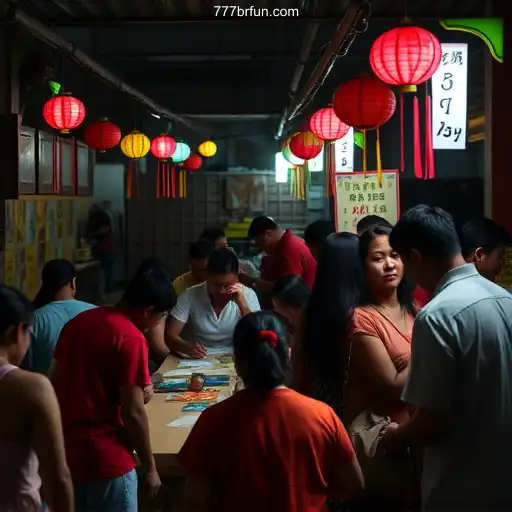
Understanding Jueteng: A Closer Look at the Controversial Game
Jueteng is a widely known illegal numbers game, predominantly played in the Philippines. Despite its unlawful status, the game remains deeply embedded in the social and cultural fabric of many Filipino communities. Its persistence can be attributed to the intricate network of participants and operators who keep it alive, as well as the socioeconomic factors that drive its popularity among the masses.
The Origins of Jueteng
The game of Jueteng is said to have originated in China, migrating to the Philippines during the Spanish colonial period. Over time, it evolved and adapted to the local setting, becoming a part of the daily lives of many Filipinos. The game's name, "Jueteng," is derived from the Chinese words "hue" and "teng," which mean "flower" and "spread" respectively, indicating the spreading of bets across a selection of numbers.
How Jueteng is Played
Jueteng is relatively simple to play, with participants selecting a combination of two-digit numbers from 1 to 37. Bets are placed on these numbers, and a draw is conducted to determine the winning combination. The draws are usually held multiple times a day, giving players numerous opportunities to place bets and potentially win money.
Despite its simplicity, Jueteng operations are complex, involving a hierarchy of collectors, ushers, and financiers who manage different aspects of the game's logistics. Collectors, commonly referred to as cobrador or kubrador, interact directly with players, collecting bets and forwarding them to ushers who, in turn, report to financiers known as kabo or kapitan. The financiers are responsible for organizing the game draws and distributing winnings.
Socioeconomic Factors Driving Jueteng
The widespread prevalence of Jueteng can be largely attributed to socioeconomic factors plaguing certain Philippine regions. In areas where poverty and lack of employment opportunities prevail, residents often resort to gambling in hopes of garnering quick financial relief. Jueteng provides an accessible platform for many who feel alienated from formal financial systems or are looking for immediate monetary gain.
The Complexity of Banning Jueteng
Efforts to eradicate Jueteng have consistently faced obstacles due to its deeply rooted presence in various communities and connections to larger organized crime networks. Law enforcement agencies find it challenging to keep up with the agile operations of Jueteng syndicates, which are often shielded by powerful political figures and entrenched local leadership.
Moreover, the financial incentives that Jueteng provides to both operators and players make eradicating it a difficult task. For many, Jueteng is not just a game but a lucrative source of income or, at least, a hopeful remedy for financial woes.
Government Responses and Legal Alternatives
The Philippine government has attempted various measures to curb the influence of Jueteng, from stringent law enforcement to launching legal gambling alternatives. The Philippine Charity Sweepstakes Office (PCSO) introduced the Small Town Lottery (STL) as a legal substitute. This initiative aims to redirect the betting tendencies of Jueteng participants into a controlled and taxable format, promising transparency and contributions to public funds.
However, despite these efforts, STL has faced its own set of challenges, including corruption and manipulation allegations. As a result, it struggles to totally eclipse Jueteng's appeal in certain communities.
A Cultural Phenomenon
In many ways, Jueteng transcends its status as a mere illegal numbers game. For some, it represents a social institution imbued with local tradition and cultural identity. Communities often gather around the shared experience of watching draws, sharing predictions, and celebrating winnings. This communal aspect fosters a deeply ingrained loyalty that defies legislative controls.
The widespread presence of Jueteng continues to hold a mirror to the broader challenges faced by Philippine society. In providing both a livelihood for some and a potential means of escape for others, it underlines the persistent broader issues of poverty and inequity that need addressing.
The Digital Future: Online Gaming in Brazil
While Jueteng remains a significant issue in the Philippines, many Brazilians are turning to the digital realm for their gaming pursuits. Platforms like 777BR.com offer users the chance to "Descubra o Melhor dos Jogos Online Brasileiros Hoje Mesmo♥️" (Discover the Best of Brazilian Online Games Today). They present a legal and accessible means to engage with games of chance, combining excitement with regulatory oversight.
These online platforms are rapidly gaining traction, providing a glimpse into the future of gambling and casual gaming across the global stage. As technology continues to evolve, the way people interact with games—be it for leisure or economic purposes—will undoubtedly transform.